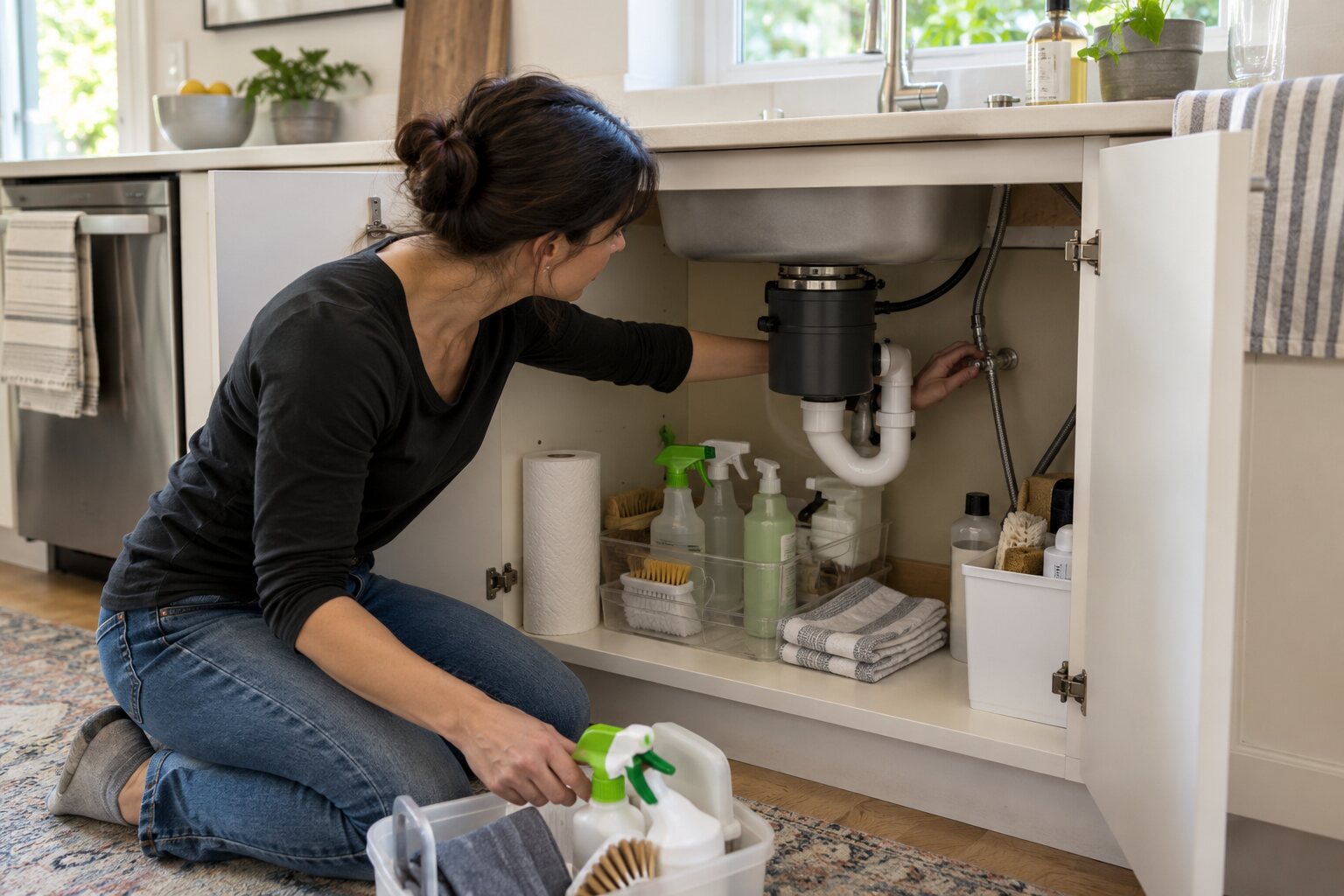
The cabinet under a kitchen sink is difficult because the useful storage space is divided by drains, supply lines, and a disposal or filter. Organization works best when the plumbing stays visible and every stored item can be removed without pushing against a connection.
Empty the cabinet and inspect first
Remove everything, wipe the base dry, and look for swollen particleboard, white mineral trails, rust, or a musty smell. Run the faucet and watch the trap, supply valves, and disposal connections for drips. Repair a leak before adding bins; a tidy cabinet can otherwise hide a slow failure.
Create zones around the pipes
Use a low pull-out tray for daily cleaners and a narrow bin on each side of the drain. Choose open-sided or adjustable organizers that can be lifted out. Keep the shutoff valves, cleanout, disposal reset button, and electrical connection accessible at all times.
Store products safely
Keep cleaners upright in a leak-resistant caddy and never combine bleach, ammonia, acids, or drain chemicals. Place sponges and cloths where they can dry rather than in a sealed container. Store children’s and pet hazards behind a secured latch or in a location that is not reachable from the floor.
Leave room for service
Do not hang heavy items from supply lines or wedge containers against the trap. Label less frequent supplies and set a small reminder to inspect the cabinet every few months. A removable tray should slide out without striking the plumbing, so maintenance can be done without emptying the entire cabinet.
The goal is not to fill every gap. A small amount of open space makes leaks easier to see, shutoff valves easier to reach, and repairs less likely to turn into a rushed cleanup.