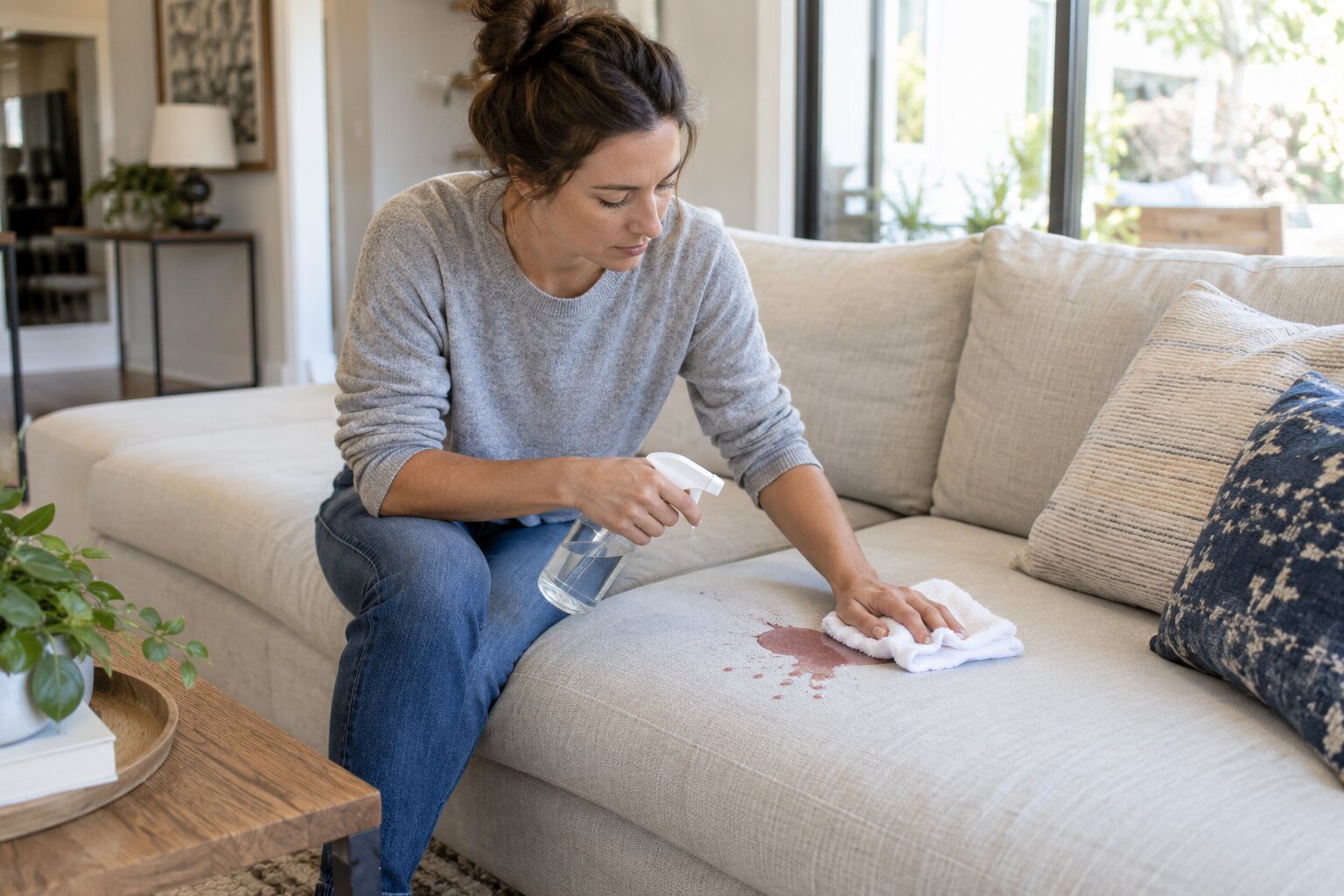
The first few minutes after a sofa spill determine how far the liquid travels and whether a ring is left behind. The safest general method is to remove solids, blot from the outside inward, and use the least amount of cleaning solution that the fabric label allows.
Read the upholstery code first
Look for the care tag under a cushion or beneath the frame. W means water-based cleaning is permitted, S means solvent-based products are required, WS allows both, and X means vacuuming or professional cleaning only. If the tag is missing, test any method in a hidden area and consider a professional cleaner for valuable upholstery.
Lift liquid instead of rubbing it
Use a spoon or dull edge to lift food or thicker material. Place clean white towels over the wet area and press straight down, changing to a dry section as the towel absorbs liquid. Work from the outside edge toward the center so the spot does not spread. Rubbing can roughen fibers and drive the spill deeper.
Use a small, controlled treatment
For water-safe fabric, lightly dampen a white cloth with the approved solution rather than pouring it onto the sofa. Dab the mark, then follow with a cloth dampened with clean water if the care instructions permit. Avoid colored towels, strong fragrance products, bleach, and aggressive brushing.
Dry the whole area evenly
Blot remaining moisture and improve airflow with a fan pointed across the surface. Do not use high heat, which can set some stains, shrink fabric, or damage adhesive beneath the upholstery. Once dry, vacuum gently and check for a tide mark under normal lighting.
Oil, ink, dye transfer, and pet accidents may require specialized treatment. If the color changes, the fabric feels stiff, or the stain keeps wicking back, stop experimenting and contact an upholstery professional with the fabric code and the spill details.