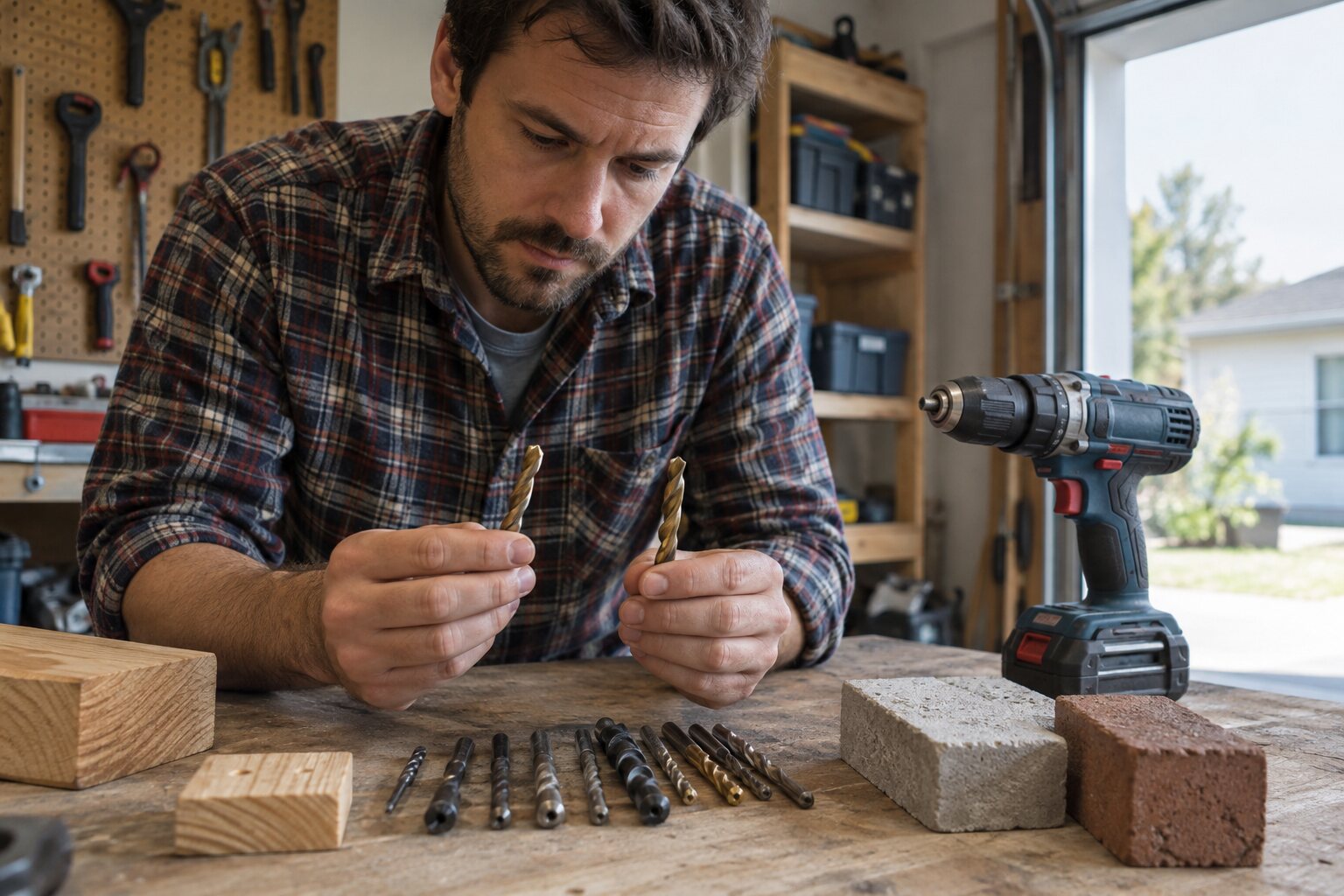
The right drill bit is determined by the material, hole size, and finish required. Using a bit that only looks close can create a wandering hole, overheated metal, broken masonry, or a fastener that will not hold.
Match the bit to the material
Wood bits commonly have a sharp point and cutting spurs, masonry bits have a carbide tip, and metal bits are designed to cut steel or aluminum at controlled speed. Multi-material bits can be convenient, but they are not automatically the best choice for a large or deep hole.
Check diameter and depth
Measure the fastener, anchor, or pipe that will pass through the hole. For a wood screw, a pilot bit should match the screw’s core rather than its outer threads. For an anchor, follow the anchor manufacturer’s diameter and depth guidance. Mark the required depth with tape or use a drill stop.
Control speed and pressure
Use slow speed and cutting lubricant when drilling metal, and clear chips frequently. Let a masonry bit work with steady pressure rather than forcing it. In wood, clamp the work and support the exit side to reduce tear-out. Wear eye protection and keep loose clothing away from the rotating chuck.
Inspect the bit before use
Do not use a bit with a cracked shank, rounded cutting edge, or excessive discoloration from heat. Tighten the chuck evenly and remove the battery before changing bits. Start with a small pilot hole when accuracy matters.
When a wall may contain wiring or plumbing, select a safe location and limit drilling depth. A good bit cannot make an unsafe drilling location safe.