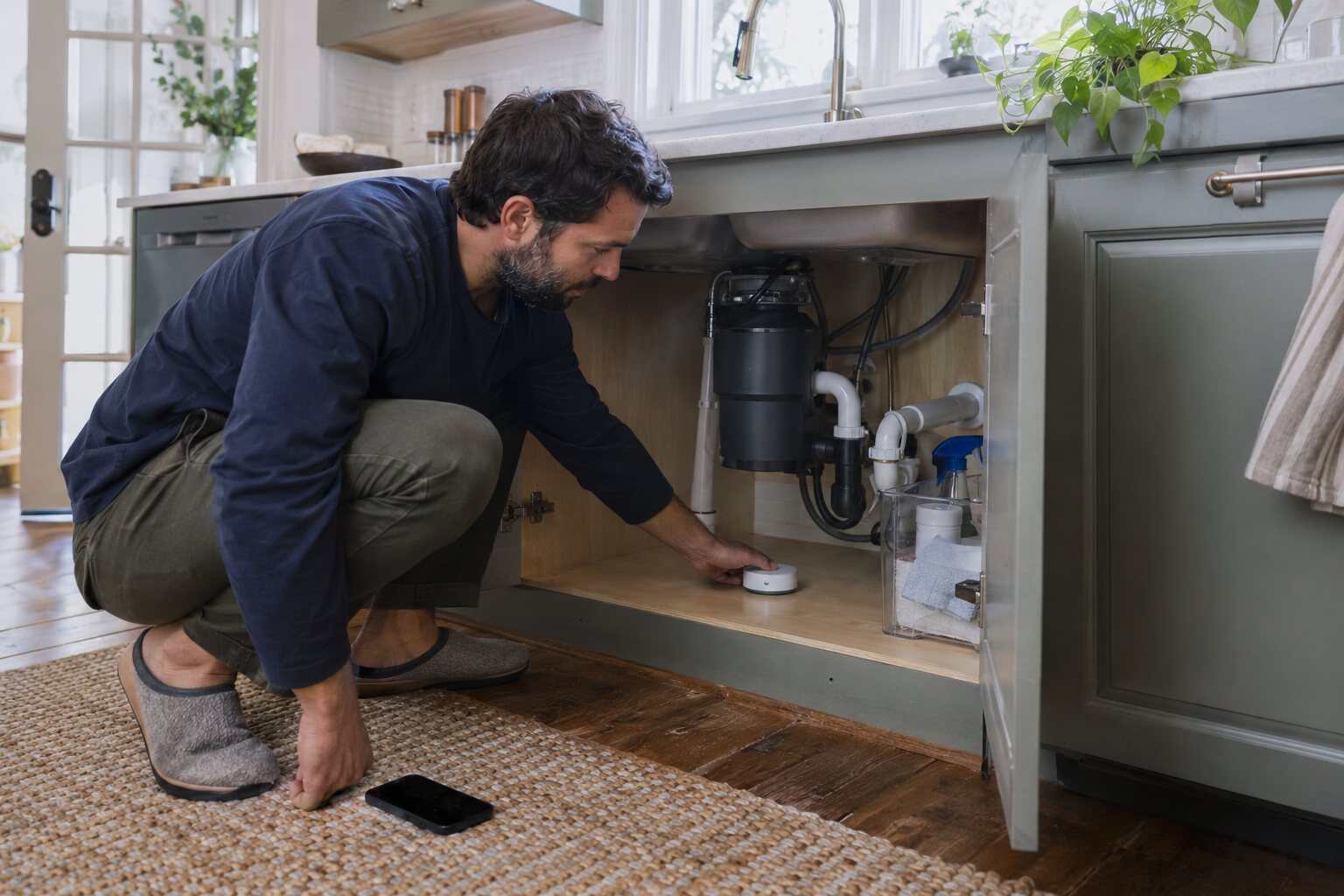
A water-leak sensor is most valuable when it is placed where a small drip will reach it before cabinets or flooring are damaged. Under-sink installation is simple, but the sensor should supplement regular inspection rather than replace it.
Choose the detection point
Look for the lowest flat area near the trap, supply valves, dishwasher hose, and disposal connections. Keep the sensor away from routine splashes and cleaning bottles. If the cabinet base is uneven, use the manufacturer’s approved mounting method without sealing the device inside a box.
Pair it before hiding it
Install the battery or activate the device near the home hub or phone. Give it a clear name such as Kitchen Sink and test the alarm and notification. Use a strong account password, enable two-step verification when available, and update the device firmware before final placement.
Keep the plumbing visible
Do not pile products on top of the sensor or wedge it against a pipe. Leave the shutoff valves and trap accessible. A sensor cannot warn you if its battery is flat, so add a recurring battery check and respond to alerts promptly rather than silencing them permanently.
Test and maintain the system
Use a damp cloth or the test method in the instructions to confirm the alarm reaches your phone. Check the cabinet after heavy use, replace batteries on schedule, and inspect for condensation or slow seepage that may not trigger a large-water alarm.
If water is near an electrical disposal connection, the cabinet floor is swollen, or a fitting continues to leak, turn off the appropriate supply and call a qualified plumber or electrician.