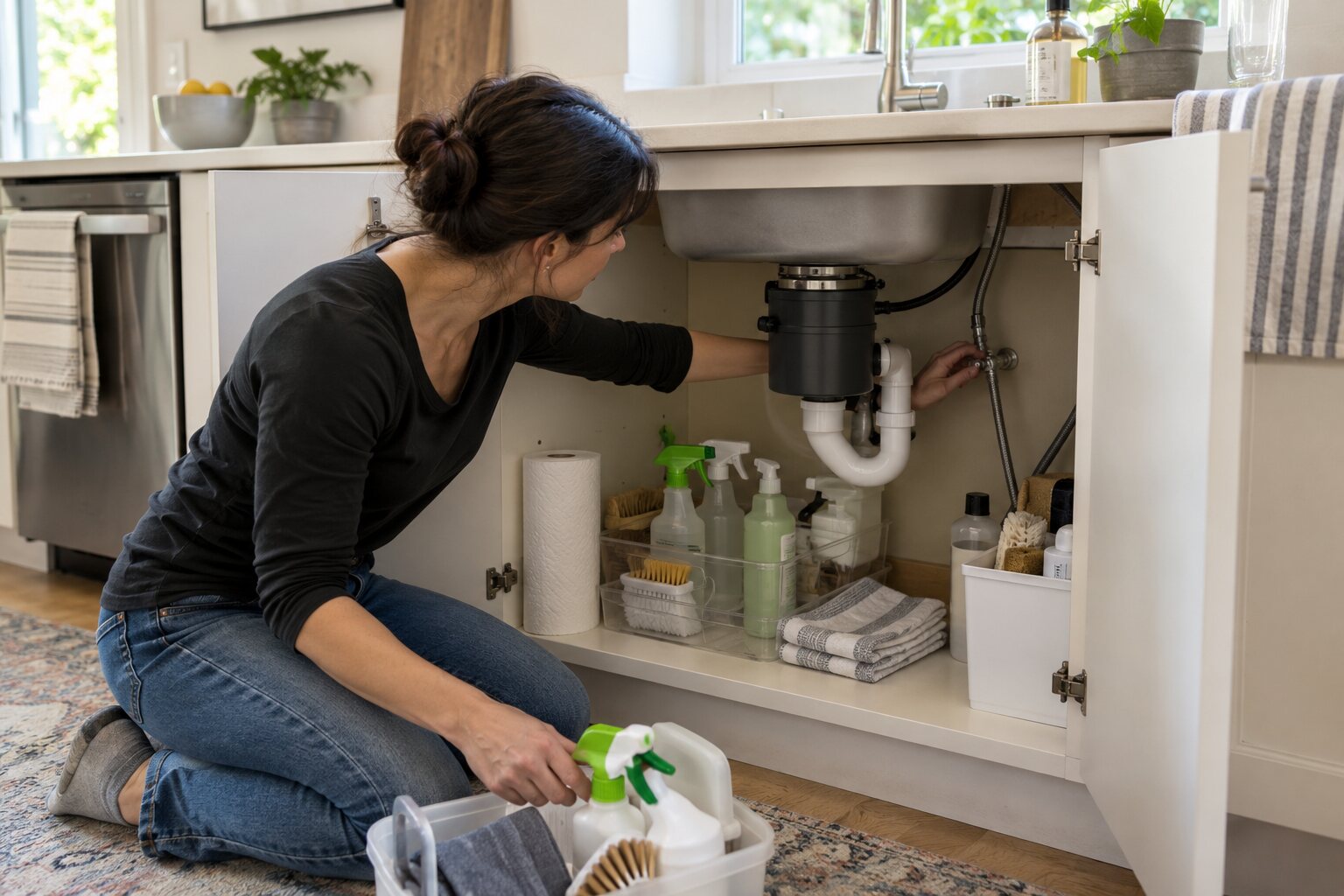
An under-sink cabinet needs organization that leaves plumbing, shutoff valves, and leak evidence visible. Bins can contain supplies, but they should not hide a slow drip or press against a trap and supply line.
Empty and check for moisture
Remove everything and inspect the cabinet floor, corners, and pipe joints. Dry any moisture and identify the source before returning supplies. Swollen particleboard, staining, or a musty smell deserves repair rather than a new storage bin.
Group supplies safely
Keep dish products, sponges, spare bags, and paper goods in separate washable bins. Store cleaners upright in their original labeled containers and do not place incompatible products together where a leak could mix them. Keep concentrated products away from children and pets.
Preserve service access
Leave a clear zone around the trap, shutoffs, disposal, and hose connections. Use low bins that slide forward instead of stacking items behind the pipes. A tray under bottles can catch drips, but it should be removable and checked regularly.
Maintain the system
Wipe the cabinet floor monthly and test the shutoff handles gently without forcing them. Recheck after plumbing work or a change in cleaning products. The best layout lets you see the plumbing at a glance and remove one category without unpacking the entire cabinet.