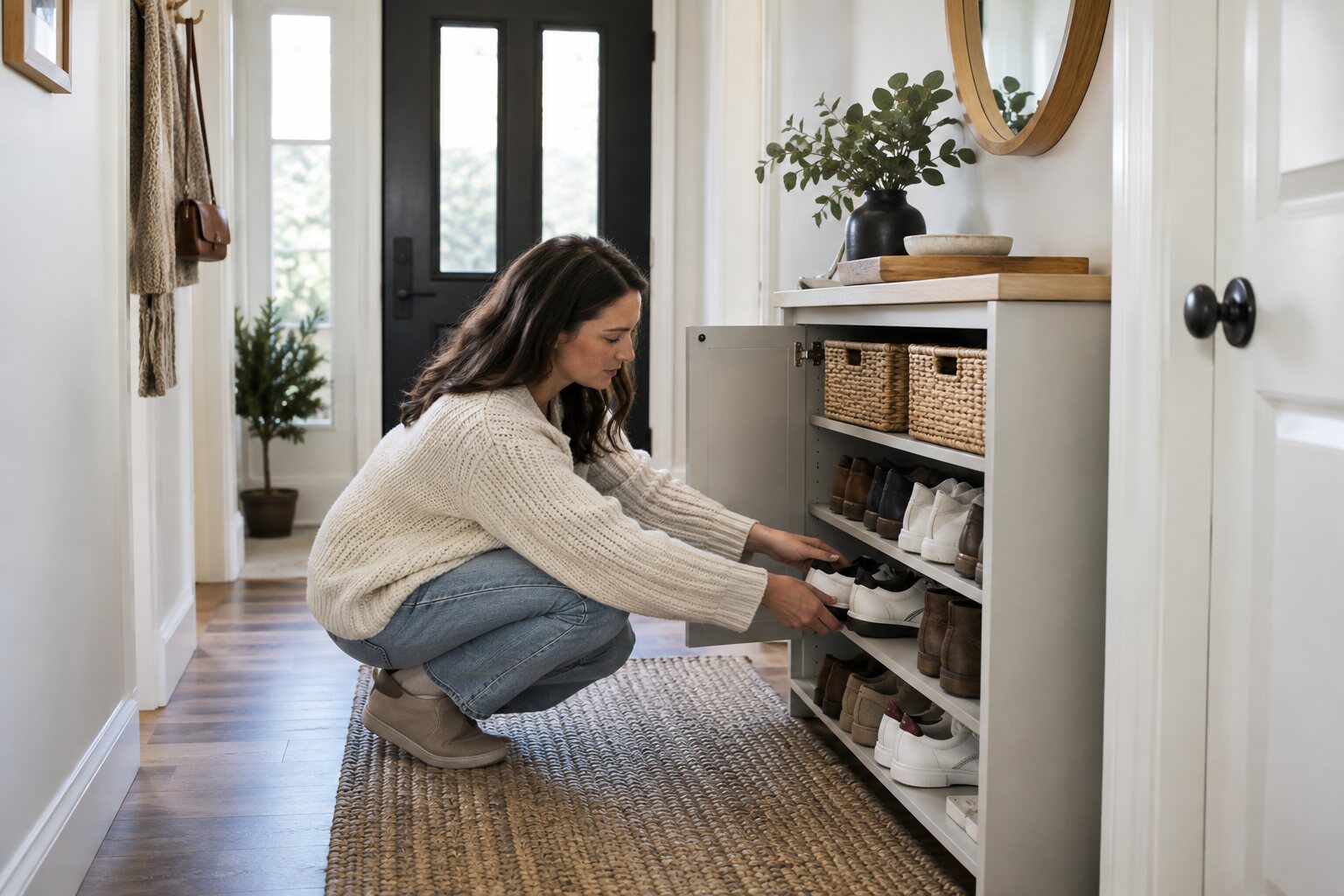
An entryway cabinet works best when it holds the shoes used most often without becoming a damp, crowded storage box. Grouping by use and leaving airflow around footwear makes the space easier to clean and safer to walk through.
Empty and inspect the cabinet
Remove every pair, sweep grit from the shelves, and check for moisture or a musty smell. Move wet shoes elsewhere to dry. Repair a sagging shelf or loose hinge before adding weight again.
Keep daily pairs accessible
Place everyday shoes on the middle shelves and reserve upper areas for occasional footwear. Use shallow baskets for sandals or children’s shoes, but avoid deep bins that hide wet or dirty items. Keep boots upright only when they are dry.
Protect the floor and airflow
Use a washable mat or tray under shoes that may carry rain or mud. Leave a small gap around the cabinet and do not block ventilation openings. Never store damp leather, fabric, or athletic shoes in a closed cabinet for long periods.
Maintain a simple limit
Keep a seasonal rotation elsewhere if the cabinet is small. Recheck the entryway every few weeks, remove worn-out pairs, and return shoes to the same zones so the floor remains clear.
If moisture keeps returning, look for a door leak, wet foundation, or poor ventilation. Organization cannot solve a persistent dampness problem.