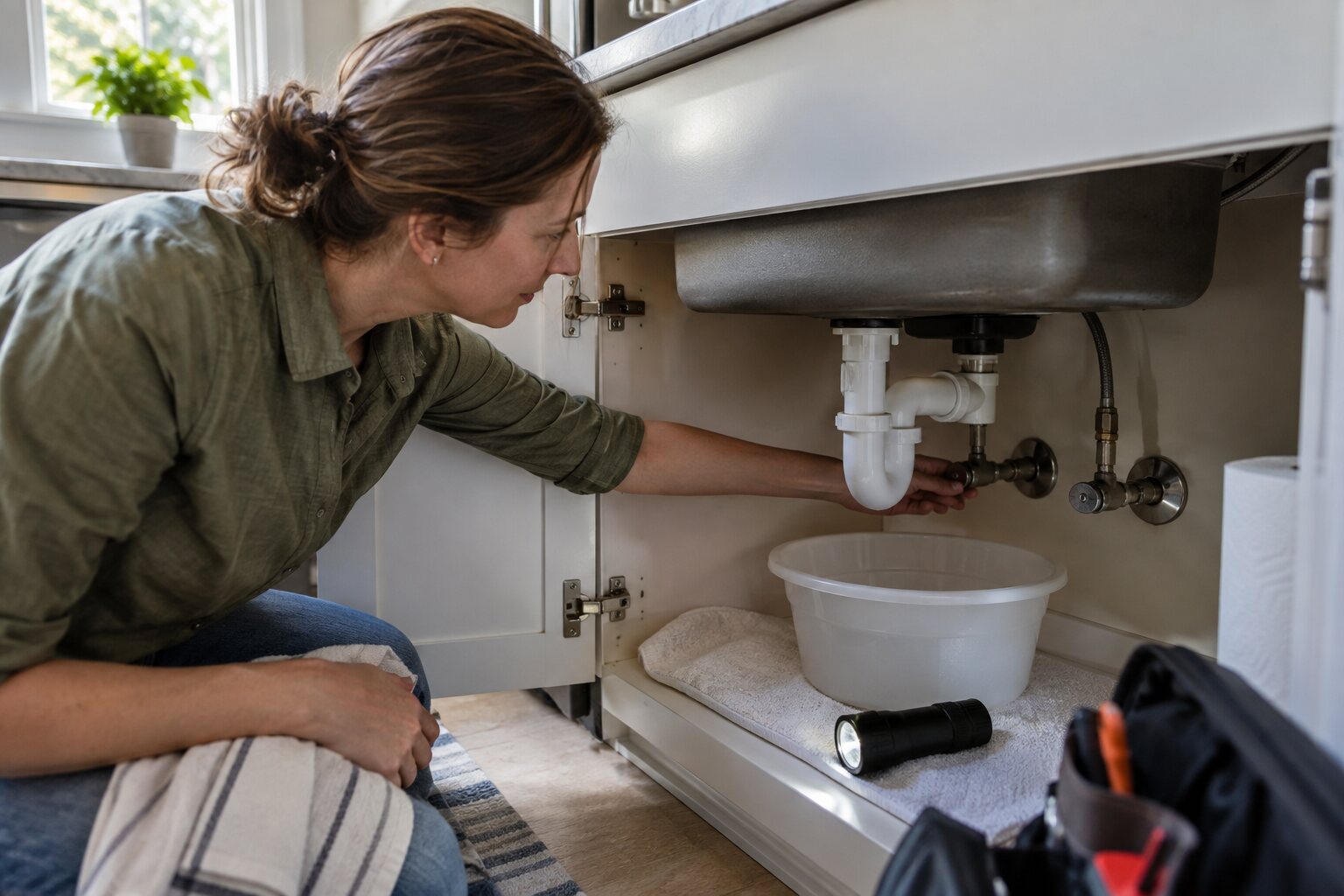
A slow drip under a kitchen sink can remain hidden behind bottles until the cabinet floor swells. A careful inspection helps locate moisture at the supply connection, valve stem, or drain while keeping the water and electrical hazards under control.
Clear the cabinet
Remove stored items and place a dry towel under the valves. Use a flashlight to inspect the wall connections, flexible supply lines, valve bodies, and drain joints. Do not force a corroded valve handle; a broken valve can release water suddenly.
Find fresh moisture
Dry each connection, wait a few minutes, and touch the towel to the joint rather than relying only on sight. Check after running both hot and cold water. Mineral trails can show an old leak, so confirm where new moisture appears.
Use the shutoff carefully
If you need to close a valve, turn it gently only as far as it is designed to move. Never use pliers on a stiff handle. Know where the main water shutoff is located before starting and keep the cabinet accessible.
Escalate the repair
Replace a damaged supply line or leaking valve with the correct part, but leave active leaks, seized valves, corrosion, or water near an outlet to a qualified plumber. Dry the cabinet and inspect the floor and adjacent trim for swelling.