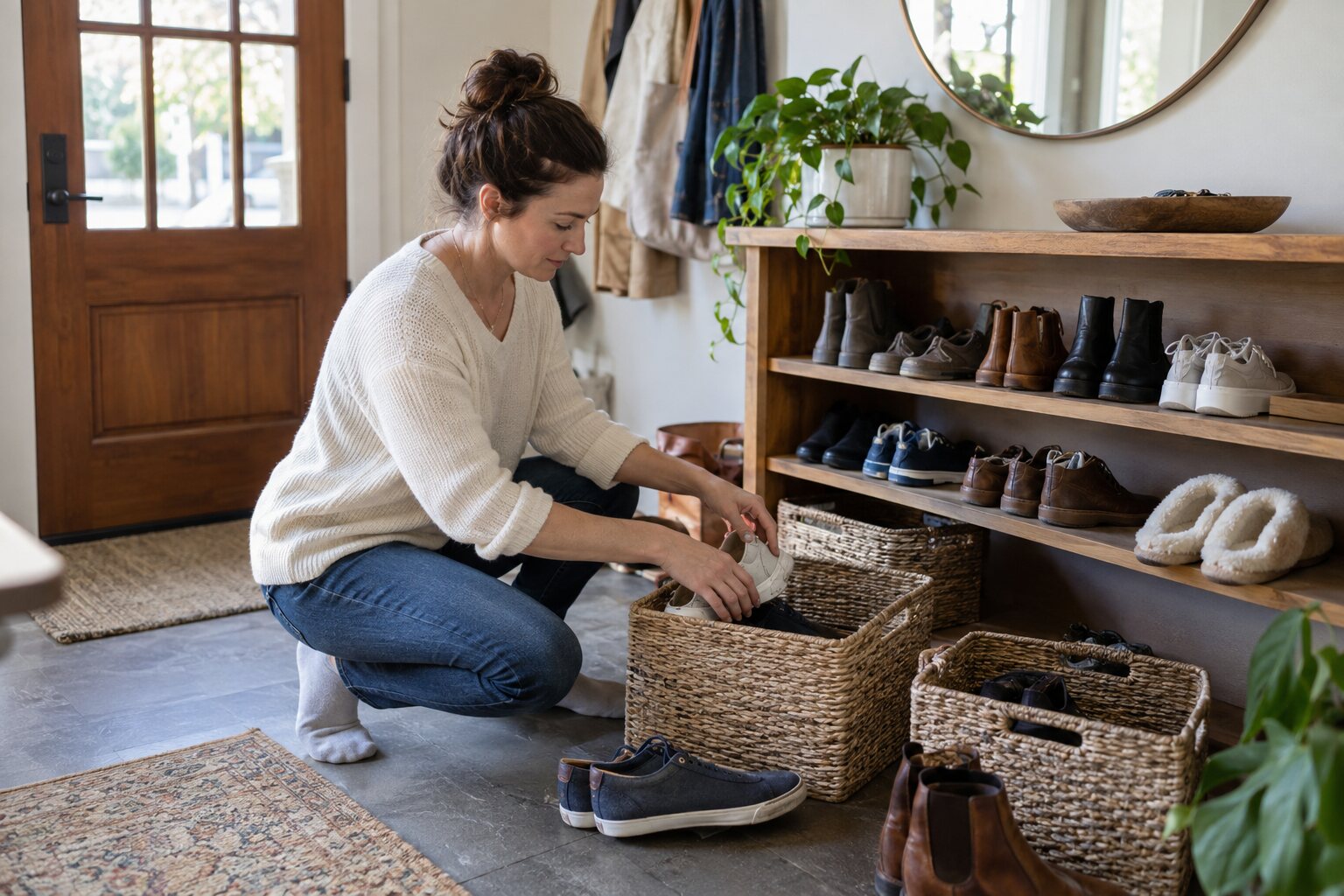
An entryway shoe shelf works best when it holds the pairs used most often and leaves a clear path around the door. Sorting it reduces tripping hazards, protects floors from grit, and makes it easier to notice wet footwear before moisture spreads.
Empty the shelf
Take every pair out and sweep or vacuum the shelf and floor. Separate daily shoes, seasonal footwear, damaged pairs, and items that belong elsewhere. Check for wet soles, loose pebbles, and mildew before returning anything.
Assign simple zones
Keep everyday shoes at reachable height and place occasional footwear higher or in a separate closet. Use a washable basket for sandals or small items, but do not fill it so high that shoes spill into the walking path.
Protect the floor
Use a shallow tray for muddy or wet shoes and empty it after storms. Keep leather and fabric footwear ventilated rather than sealed while damp. Avoid blocking the door swing, heating vent, or electrical access near the entry.
Maintain the system
Return only the pairs used in the current season and review the shelf monthly. Wipe grit from soles before storage and repair or discard unsafe footwear. A smaller, visible collection is easier to keep orderly than a full shelf with no empty space.