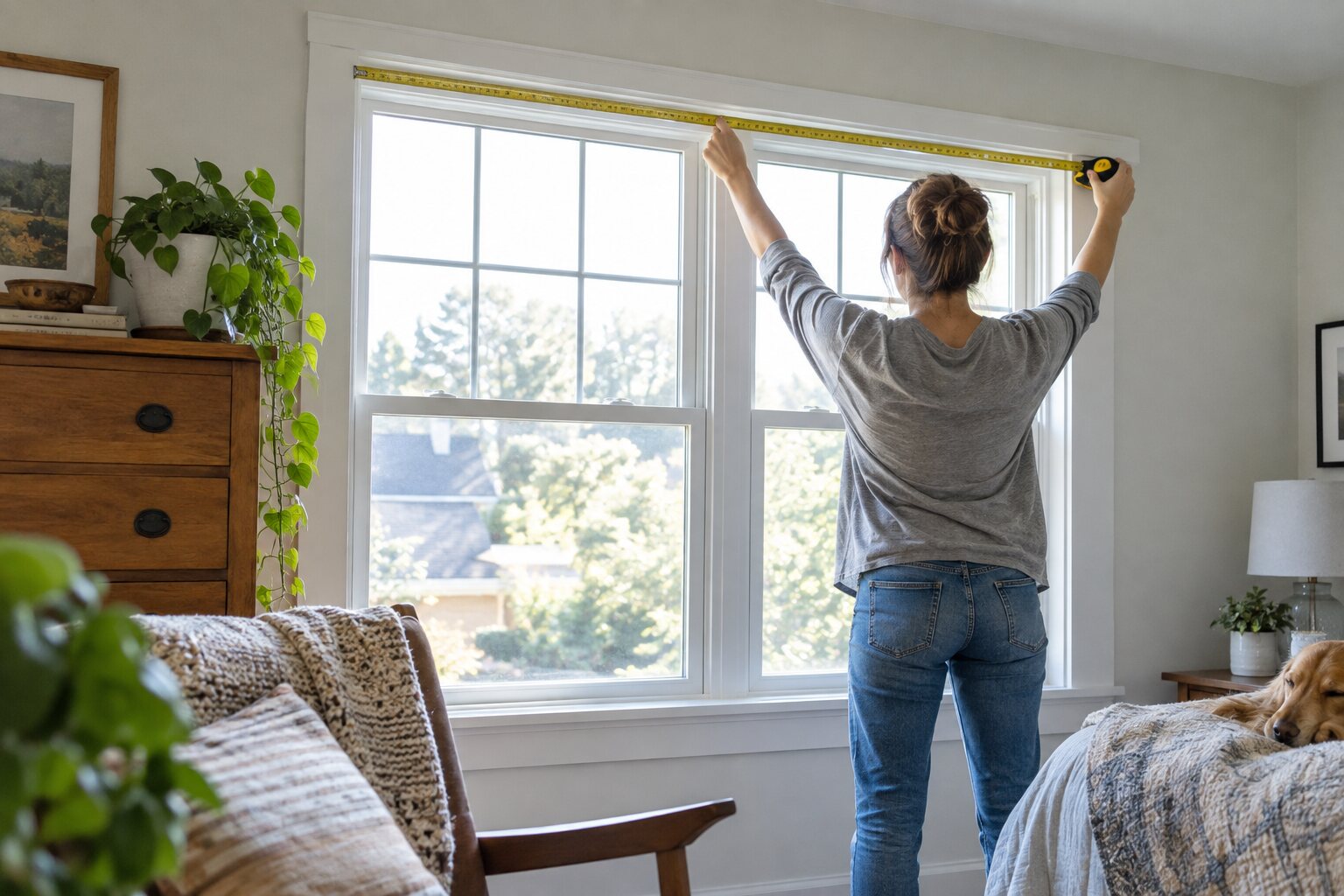
Accurate measurements make a curtain rod look intentional and prevent unnecessary holes in the wall. Measure the window, trim, and nearby furniture before choosing the rod length or bracket position.
Record the opening
Measure the inside width at the top, middle, and bottom if the rod will fit inside the recess. For a rod mounted outside the trim, measure the visible window and casing separately. Note the height from the floor, ceiling, or sill to the top of the trim, and write each number down rather than relying on memory.
Allow for the fabric
Most curtains look fuller and open more completely when the rod extends beyond the casing on both sides. Leave enough space for the stacked fabric to clear the glass, but check that a wall, cabinet, or adjacent door will not block the bracket. If the curtains have grommets, measure their top edge and account for the rod diameter.
Find solid support
Use a stud finder or tap test to identify framing, then mark bracket locations with painter’s tape. If a bracket cannot land on a stud, choose anchors rated for the combined rod and fabric weight. Do not assume drywall alone will hold a heavy blackout curtain.
Make a final dry fit
Hold a straightedge or the rod at the proposed height and step back. Check that it is level, clears the window handle, and does not interfere with blinds. Mark both brackets from one reference line, then drill only after confirming the measurements twice.
A few minutes of measuring prevents a crooked installation and leaves the curtains easy to open, close, and remove for washing.