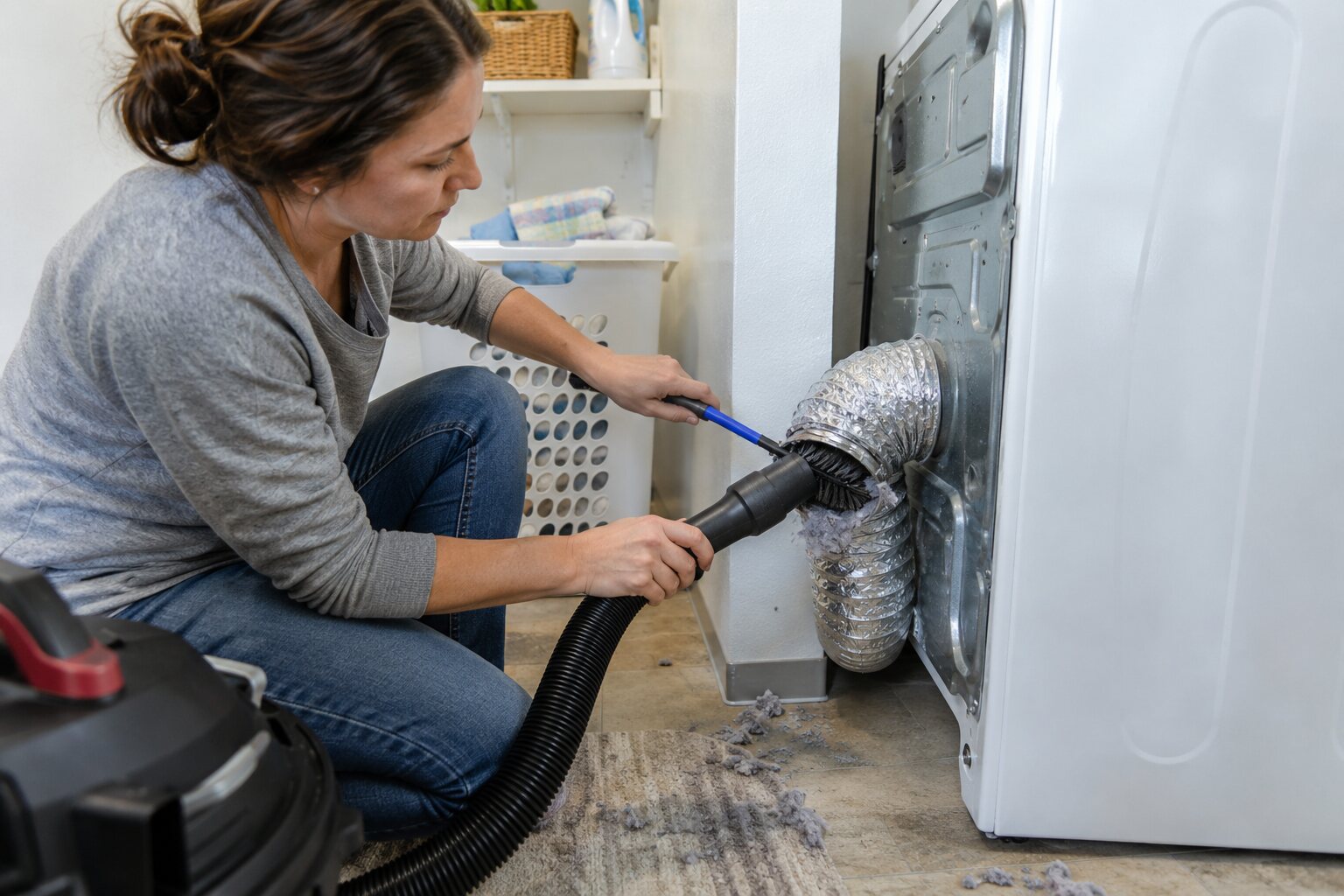
Lint around a dryer vent connection reduces airflow and adds a fire risk. Cleaning the lint screen alone is not enough when buildup has reached the hose, wall outlet, or floor behind the appliance.
Disconnect safely
Unplug an electric dryer or close the gas valve and unplug a gas dryer before moving it. Let the appliance cool completely. Pull it forward only as far as the flexible vent allows, and ask for help if it is too heavy to move without straining or crushing the hose.
Clean the screen housing
Remove the lint screen and brush both sides. Use a narrow vacuum attachment around the screen slot, working gently so the tool does not damage the sensor or interior grille. Wash a screen only if the manufacturer permits it, and let it dry fully before reinstalling.
Inspect the hose and wall outlet
Loosen the clamp at the dryer and examine the hose for crushed sections, tears, or heavy lint. Vacuum from both ends with a dryer-vent brush or suitable hose, keeping the tool aligned with the duct. Replace foil or plastic hose that is damaged or excessively flexible with a code-appropriate metal vent assembly.
Reconnect and test airflow
Secure both ends without sharp bends and push the dryer back while keeping the hose open. Run an air-fluff or short cycle and check that the exterior flap opens freely. Stop if you smell gas, see scorching, or find a blocked wall duct; those conditions require professional service.
Clean the screen after every load and inspect the connection seasonally. Good airflow dries clothes faster and keeps heat and lint moving outdoors.