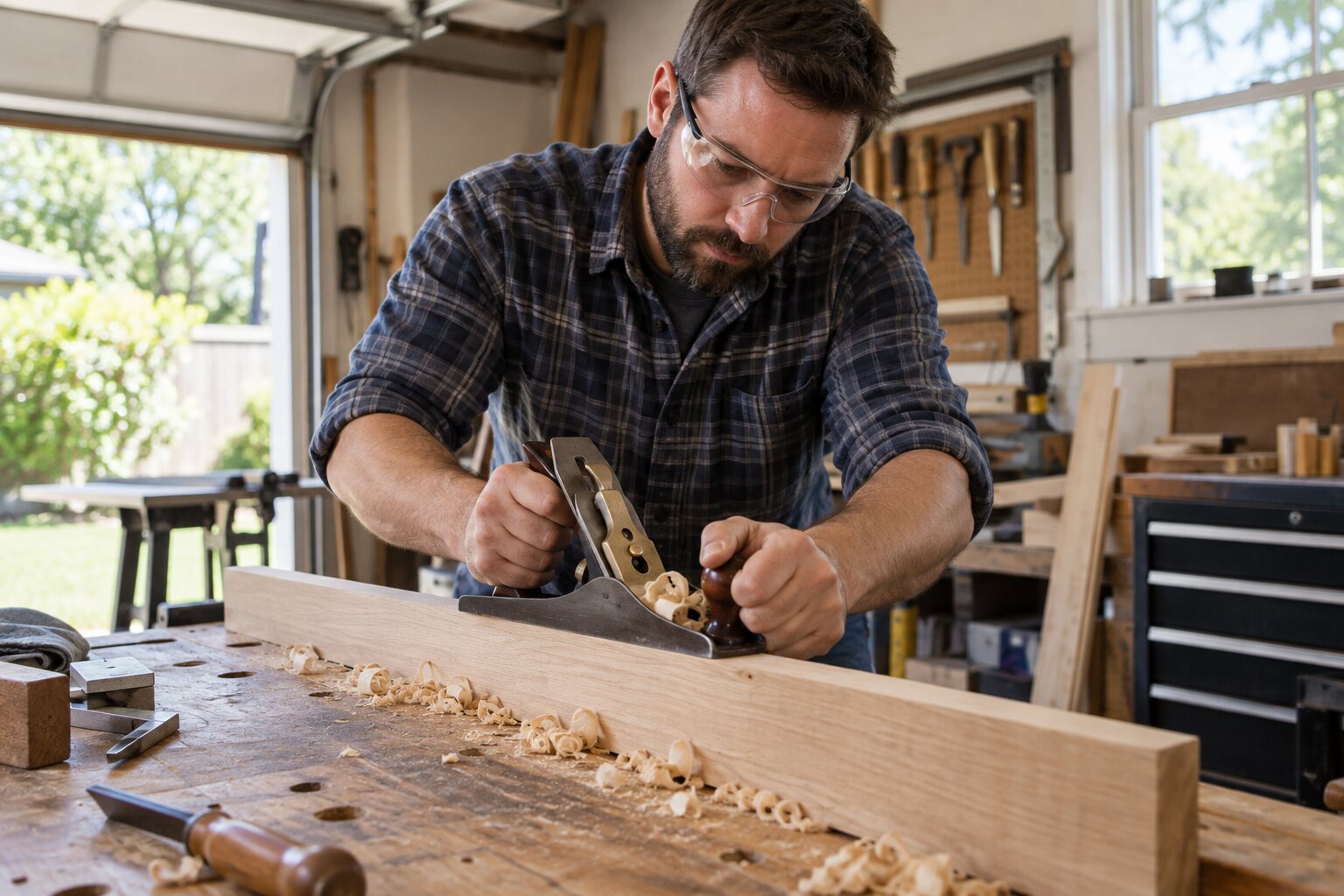
A hand plane can produce a clean board edge when the blade is sharp, the grain direction is understood, and the workpiece is held securely. The tool removes thin shavings; forcing it through a rough board usually creates tear-out instead of a faster result.
Prepare the plane and board
Inspect the blade for a clean edge and set it for a light cut. Secure the board against a stop or in a vise with the edge supported. Wear eye protection and keep both hands behind the cutting path.
Read the grain
Look at the grain direction along the edge and plan to plane with the grain whenever possible. Make a short test pass on a scrap or hidden section. If fibers lift ahead of the blade, reverse direction or reduce the cut.
Use a balanced stroke
Start with pressure over the front of the plane, then shift pressure toward the rear as the tool leaves the board. Keep the sole flat and use long overlapping passes. Check the edge with a straightedge and square instead of removing more material by guesswork.
Finish and store the tool
Stop when the edge is straight and smooth enough for its purpose. Break a sharp corner lightly if the project calls for it, then brush shavings away and protect the blade from moisture. Store the plane on its side or with the blade retracted.
Deep tear-out, a loose blade, or a board that moves in the vise is a reason to stop and reset the work. Controlled thin shavings create a better finish than heavy pressure.