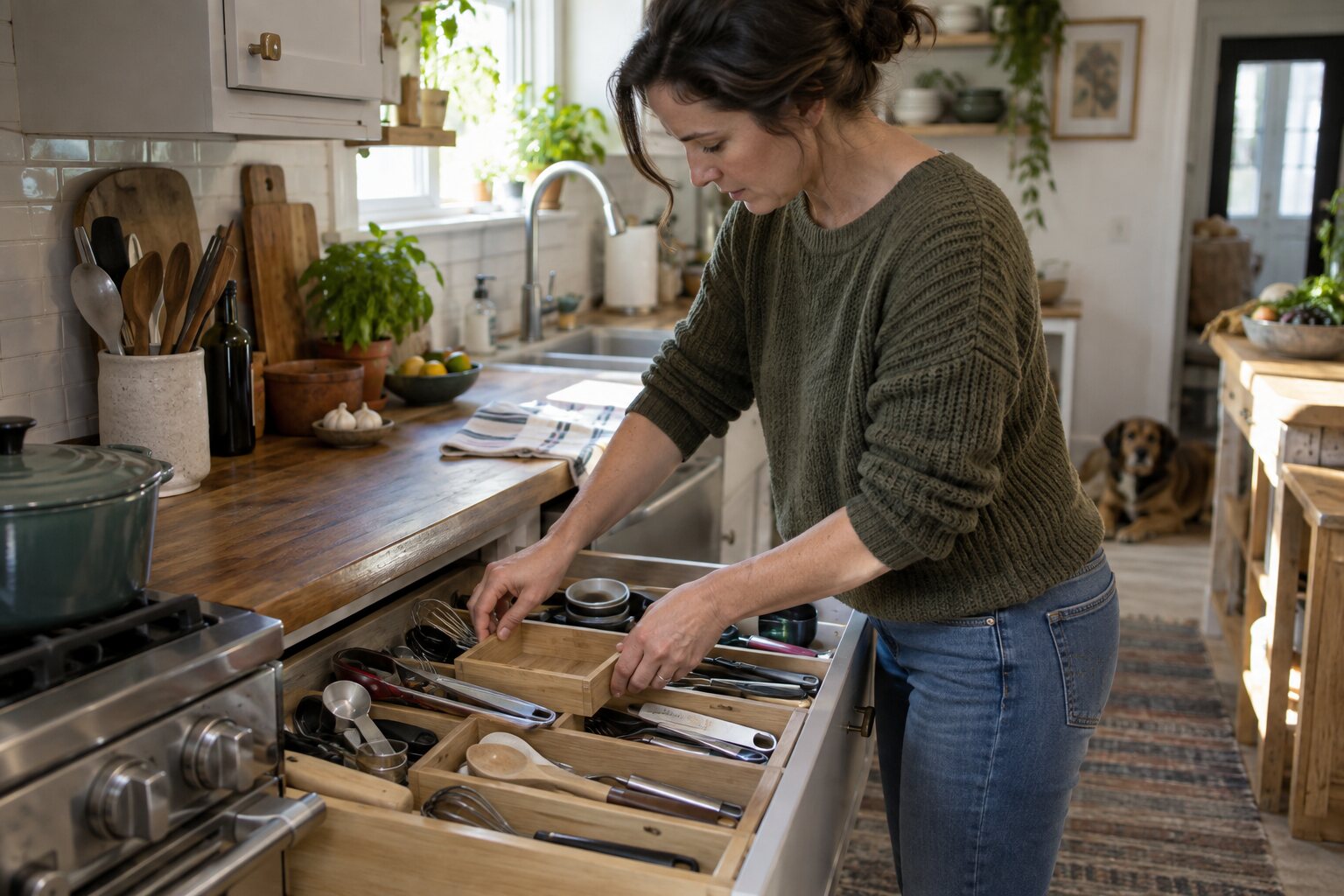
A utensil drawer becomes difficult when every tool is stored by shape instead of by frequency and task. A short reset can make the drawer easier to use while keeping sharp edges, long handles, and heat-sensitive items under control.
Empty and group before buying organizers
Remove the entire contents and wipe the drawer. Group stirring tools, measuring tools, serving pieces, prep tools, and duplicates. Keep only the items that fit the drawer’s depth and that you can reach without lifting several layers.
Measure the drawer interior
Check width, depth, height, and the clearance behind the drawer face. Choose trays that do not block the runners or leave pressure against the sides. Adjustable dividers are useful when the collection changes, but a few shallow open compartments are often easier to clean than a crowded custom insert.
Place frequent tools in front
Put the spatula, tongs, measuring spoons, and everyday knives where your dominant hand can reach them quickly. Keep sharp blades in a protected slot or separate drawer, and keep long tools from crossing over the drawer’s opening. Store rare specialty tools elsewhere so daily items are not buried.
Leave working space
Do not fill every compartment. A small amount of spare room makes it possible to return tools without forcing them into the wrong section. After a week, note what still migrates and adjust the dividers instead of adding more containers.
Discard cracked plastic, rusting tools, and damaged handles. A drawer that opens smoothly and can be wiped quickly is more useful than a perfectly full drawer that jams every morning.