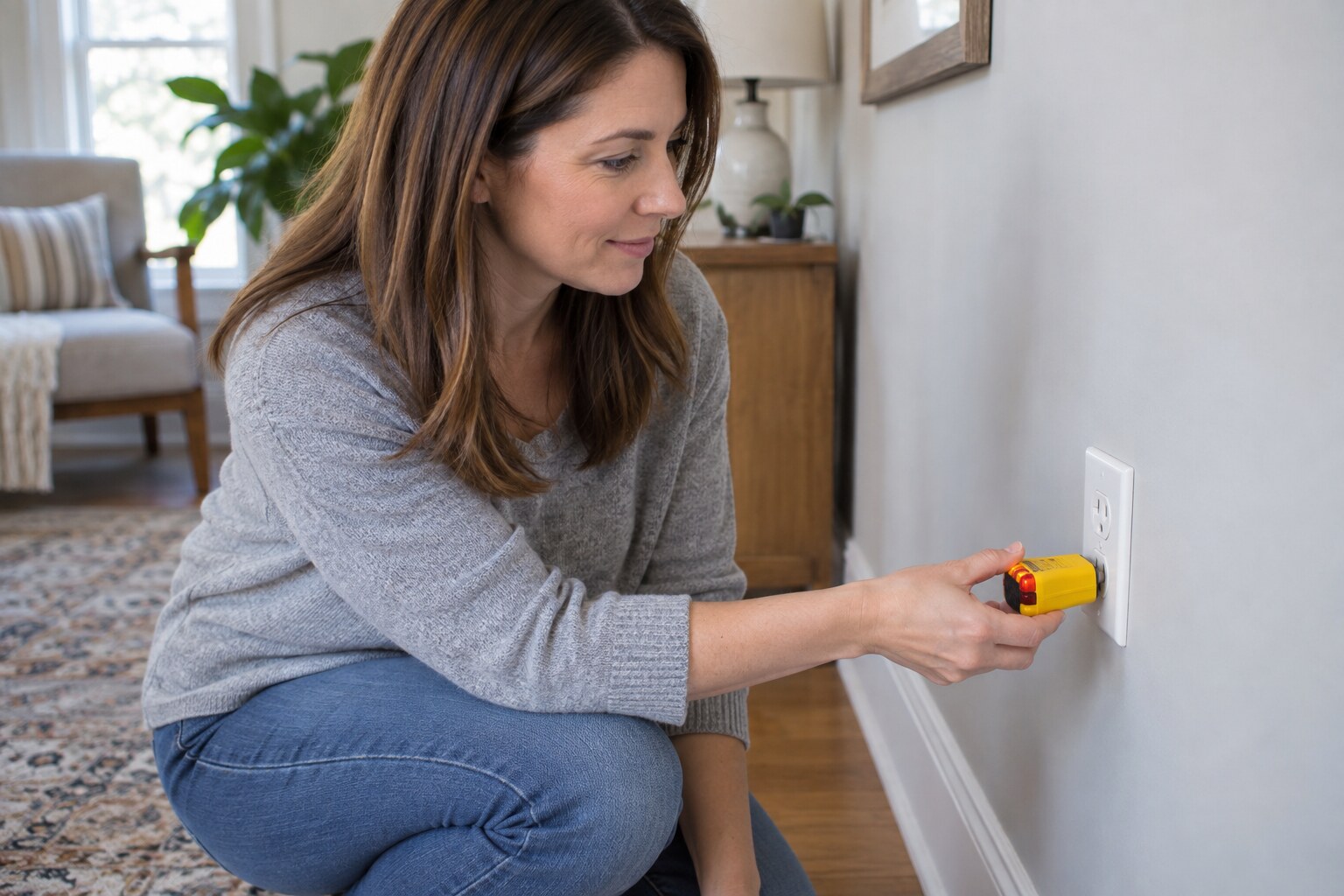
A plug-in circuit tester gives a quick indication of common outlet wiring conditions, such as an open ground or reversed hot and neutral. It is a screening tool, not a substitute for an electrician when an outlet is damaged or uncertain.
Inspect before plugging in
Do not test an outlet with scorch marks, looseness, moisture, cracked plastic, or exposed conductors. Keep hands dry, stand on a dry floor, and use a tester rated for the electrical system in the home.
Read the tester pattern
Plug the tester fully into the receptacle and compare the light pattern with the legend printed on that tester. Different models use different lights, so do not rely on memory or a generic chart.
Stop for unsafe results
If the tester indicates a wiring fault, the outlet is warm, or a breaker trips, unplug the tester and stop using the receptacle. Do not open the box unless you are qualified and have confirmed the circuit is de-energized.
Document the location
Record which outlet was tested and what the tester showed. An electrician can use that information to trace a fault, especially when several outlets share a circuit.