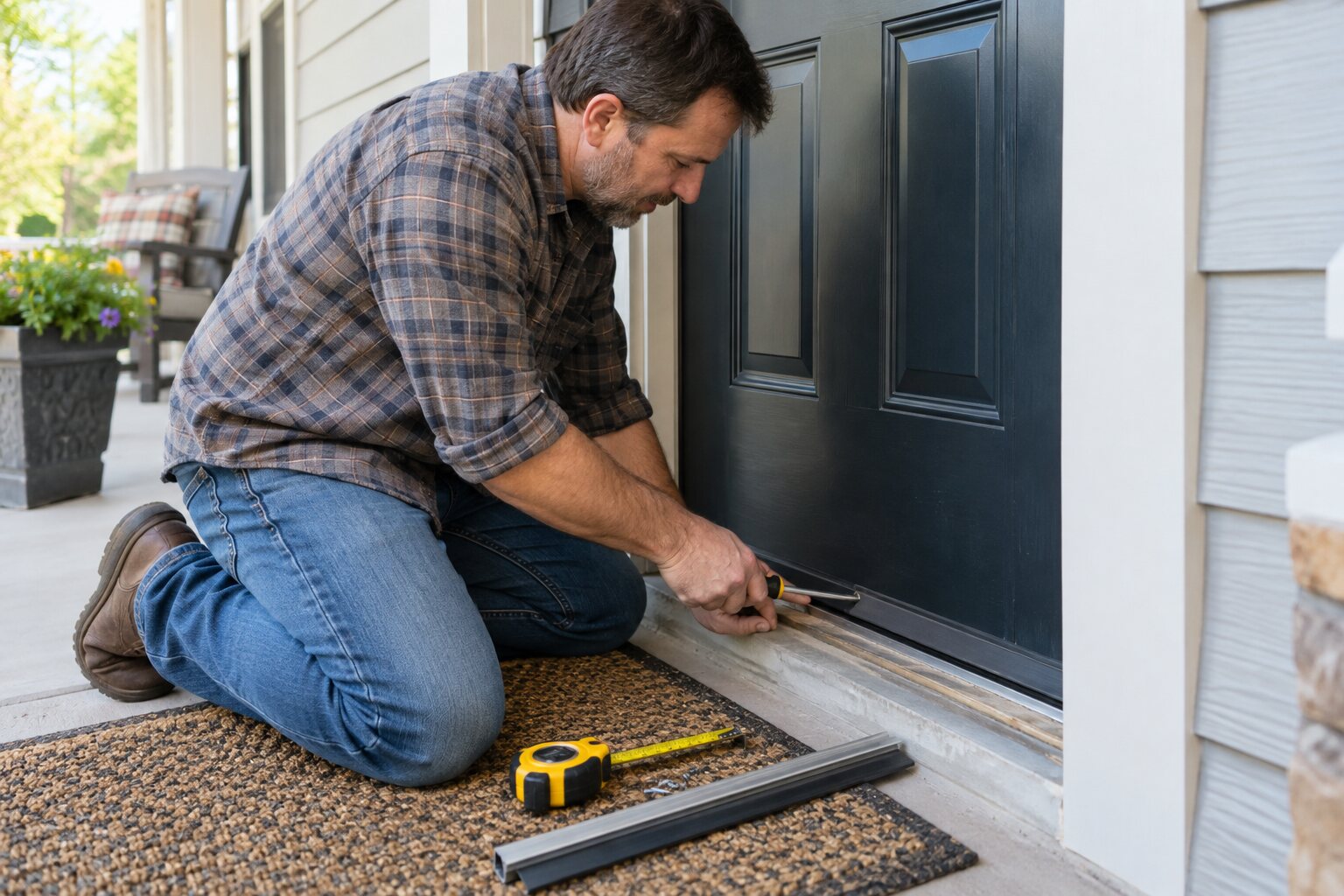
A door sweep is a small part with an outsized effect on comfort. When the rubber or brush edge wears down, daylight can show beneath the door, outside air can enter, and dust or insects may collect at the threshold. Replacing the sweep is usually manageable, but the fit matters more than simply attaching a new strip.
Confirm that the sweep is the problem
Close the door and inspect the bottom edge from both sides. Look for cracked rubber, missing brush bristles, a section that no longer touches the sill, or a sweep that has shifted sideways. On a windy day, move your hand slowly along the threshold to feel for moving air. Also check the sill itself because a damaged sill can leave a gap that a new sweep will not solve.
Measure before buying
Measure the door width at the bottom and the existing sweep from end to end. Choose a replacement designed for the door material and mounting style. Some sweeps slide into a channel, while others screw to the door face. A sweep that is too short leaves a leak at one corner; one that is too tall can make the door drag.
Remove and install carefully
Open the door fully and remove the retaining screws. If paint or caulk has sealed the edges, score that line with a utility knife rather than pulling hard. Clean dirt from the bottom of the door. Hold the replacement with its lower edge just contacting the threshold, start with the center screw, check alignment, and then install the rest. It should compress slightly when the door closes, not fold over or require force.
Check the result
Close the door several times and adjust the sweep in small increments. Test the latch, the weather seal along the jamb, and the threshold transition. Recheck the screws after a week of use. If the door is sagging, the threshold is rotten, or water enters during rain, treat those as separate repairs. Wear eye protection when cutting metal, and ask a qualified professional before changing hardware on a fire-rated assembly.