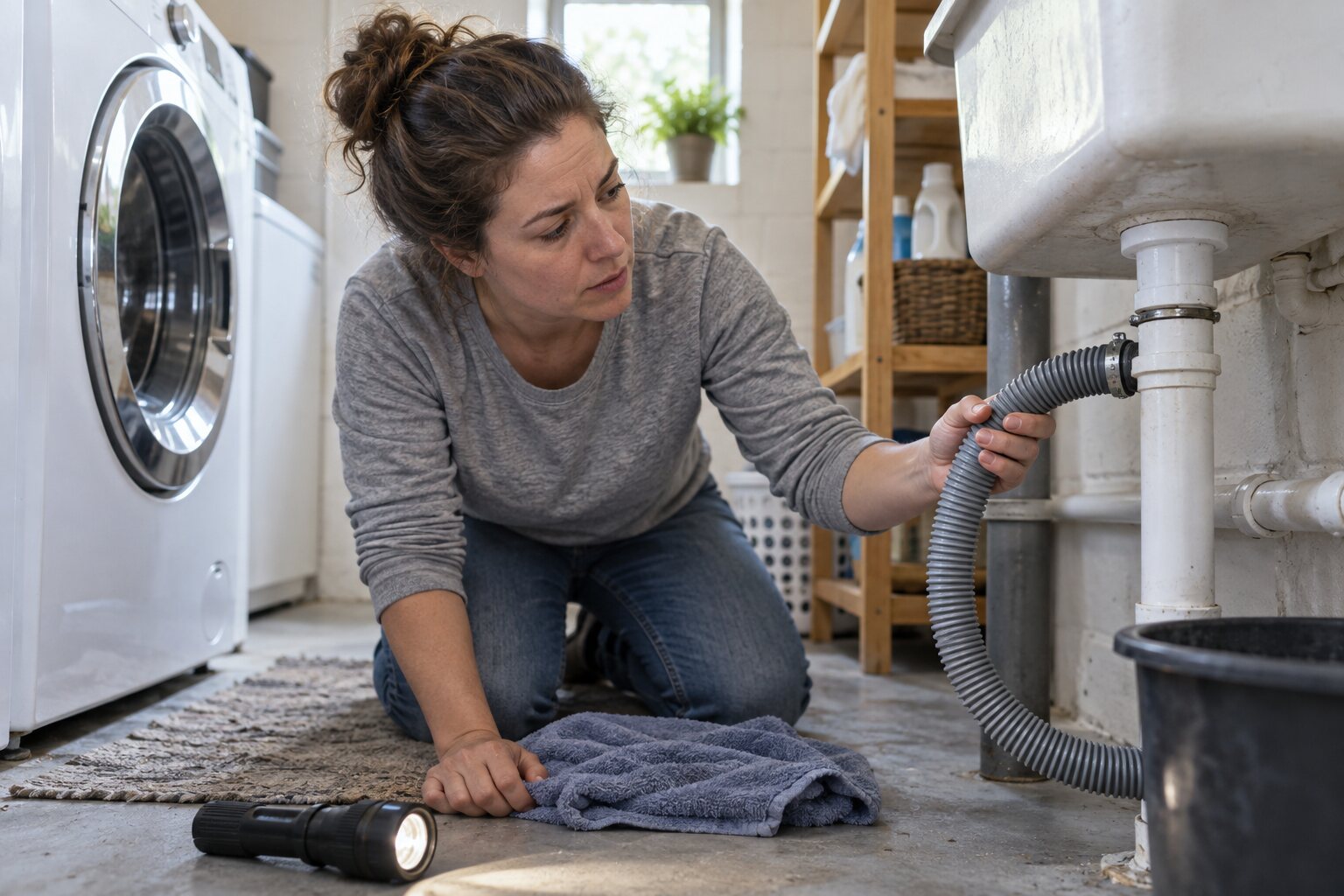
A washing-machine drain hose can leak at the standpipe, wall connection, or appliance outlet. Inspecting it before a small drip becomes floor damage takes only a few minutes and helps distinguish a loose hose from a clogged drain or a failing pump.
Start with safe access
Unplug the machine before moving it and keep water away from the receptacle. Pull the appliance forward only as far as the hoses allow. Place a towel and shallow pan below the connection so a small amount of trapped water does not spread across the floor.
Trace the full route
Follow the hose from the back of the machine to the drain. Look for kinks, abrasions, soft spots, and a hose that is inserted too deeply into a standpipe. The hose should be secured against whipping during the pump-out cycle but should not be sealed airtight into a drain that needs an air gap.
Run a controlled test
Restore power and run a short rinse or drain cycle while watching the connection from a safe position. Do not reach behind a moving machine. If water appears, stop the cycle, unplug the appliance, and tighten or replace the clamp only after the system is depressurized and drained.
Escalate recurring leaks
A hose that is split, swollen, or brittle should be replaced with the correct appliance-rated part. Persistent backup, sewage odor, or water rising from the standpipe suggests a drain problem rather than a hose problem. Dry the floor and check adjacent trim for swelling after any leak.