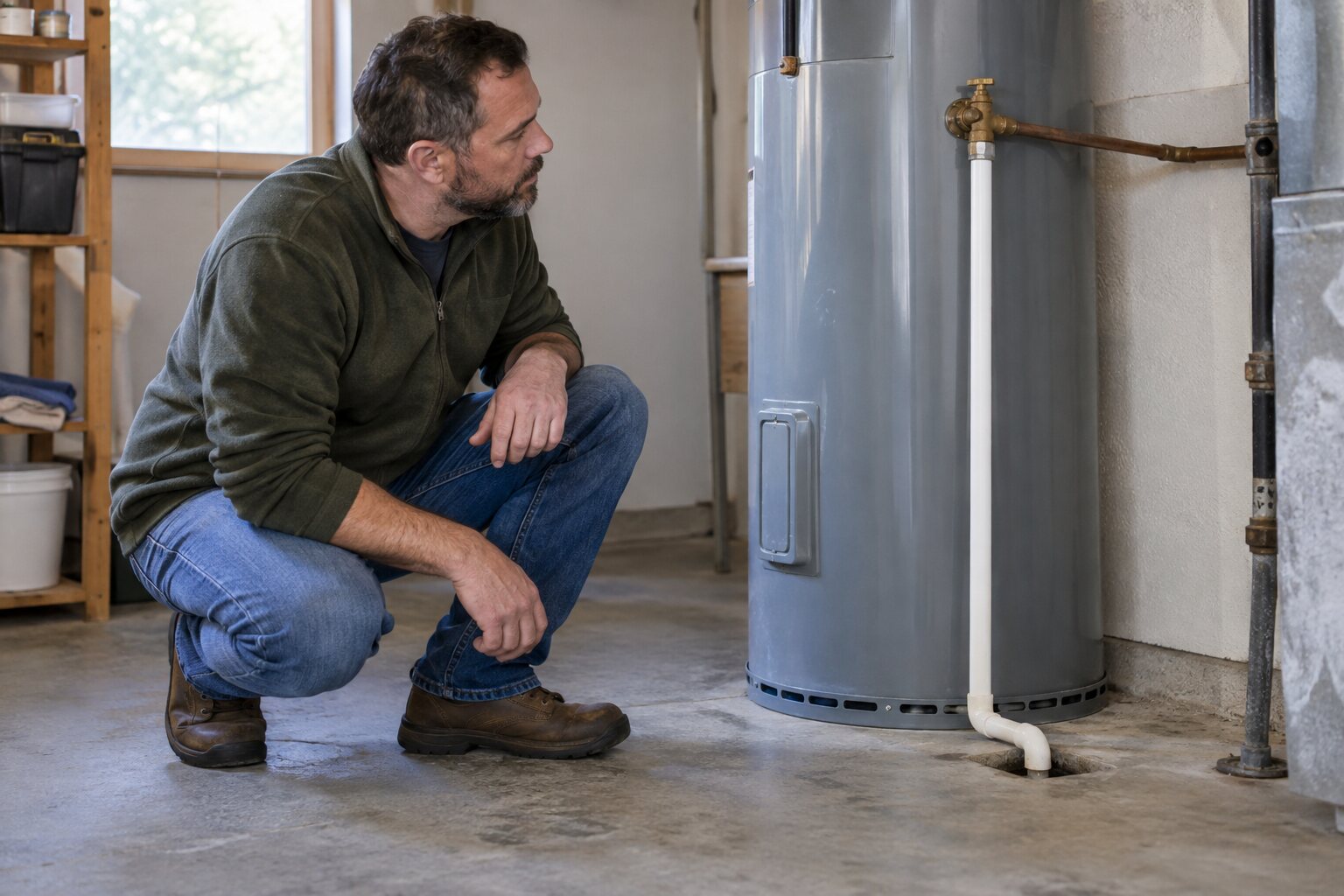
The discharge pipe connected to a water heater’s temperature-and-pressure relief valve is an important safety component. A homeowner can look for obvious leaks, corrosion, or a missing termination, but should never operate the valve casually or touch hot water and piping.
Keep a safe distance
Read the appliance label and keep children away from the utility area. Do not remove insulation, open panels, or test the relief valve unless the manufacturer and a qualified professional direct you. The pipe and water may be hot enough to cause serious burns.
Trace the pipe
Follow the pipe from the relief-valve opening toward its termination. It should be secure, unobstructed, and routed so discharged water cannot injure someone or damage electrical equipment. Look for rust, mineral trails, a capped end, or a pipe that terminates in an unsafe location.
Look for warning signs
Moisture at the valve or pipe, repeated dripping, unusual corrosion, or a missing pipe deserves prompt professional attention. Do not plug or cap the line to stop a drip. A relief valve that opens may be responding to excessive pressure or temperature.
Document and escalate
Take a clear photograph from a safe distance and note when you observed the condition. Contact a licensed plumber for repairs or questions about the installation. If hot water is actively discharging or the tank appears damaged, keep clear and follow the emergency instructions for the appliance.