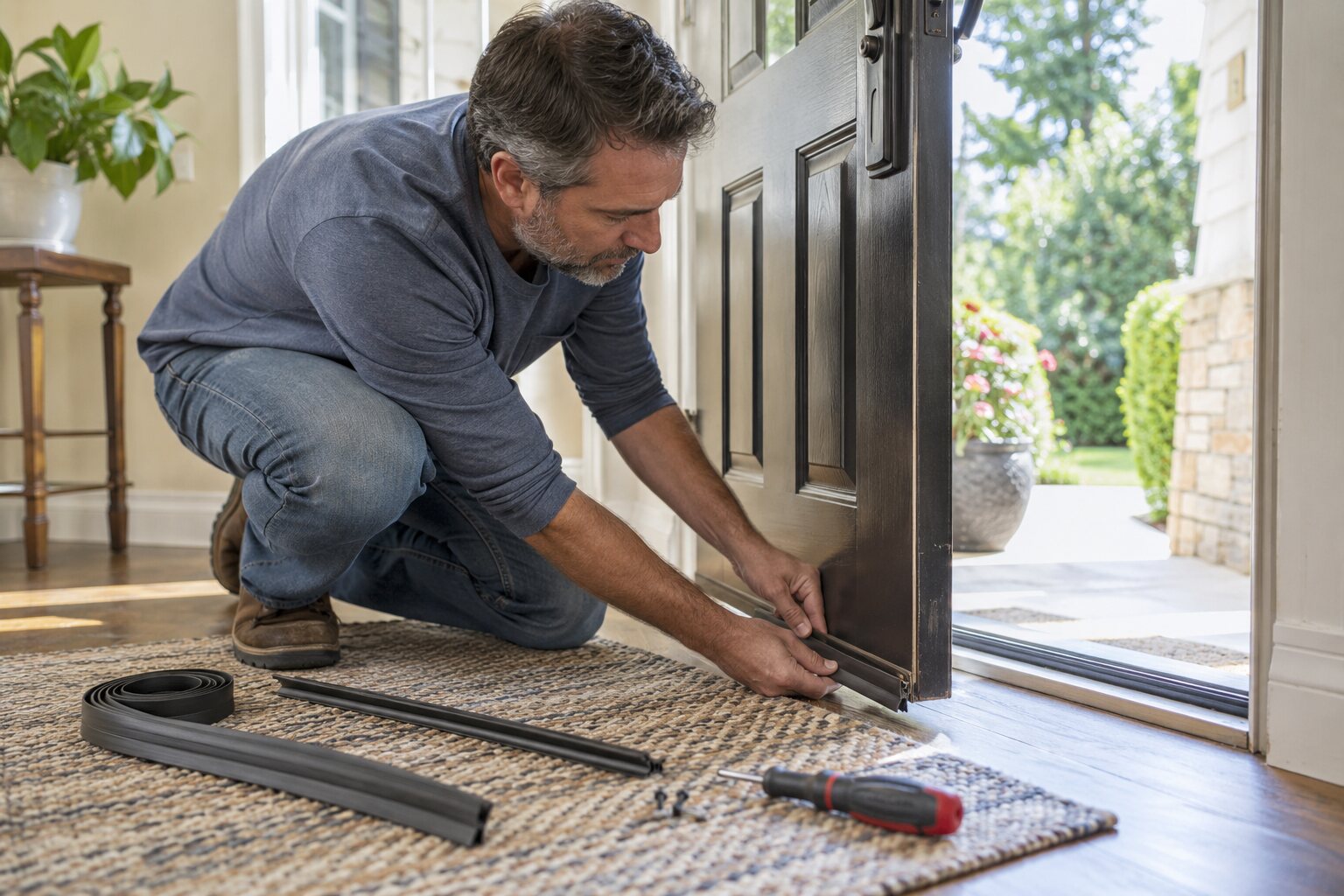
A worn door weatherstrip can let drafts, dust, and outside noise around an otherwise sound door. Replacing it is a small maintenance job, but measuring carefully and fitting the seal without compressing it too much makes the difference between a quiet, easy-closing door and one that rubs or still leaks.
Confirm the source of the draft
Close the door and inspect the hinge side, latch side, and head separately. On a windy day, move a thin strip of tissue near the closed edges and look for movement. Check that the door is aligned before blaming the weatherstrip; a loose hinge or a shifted strike plate can create a gap that a new seal will not correct. If the threshold is the problem, mark that separately because the bottom seal may need a different repair.
Measure and remove the old seal
Measure the head and both jambs, then add a small allowance for clean cuts. Photograph the existing corners before removing it. Pull out a short section first and identify whether it is nailed, stapled, screwed, or pressed into a kerf slot. Use a putty knife to lift fasteners and scrape away loose adhesive without gouging the frame. Take the old piece to the store if its profile is unusual.
Fit the replacement
Cut the head piece first and place it without stretching. Then cut the latch-side and hinge-side pieces so they meet the head with neat, lightly compressed joints. Fasten the seal according to its design, starting near the center and working toward the ends. Close the door several times while checking that the latch engages normally. The seal should contact the door evenly but should not require force to close.
Final checks
After a day, inspect the corners for gaps and listen for rubbing. Trim only small excesses; do not crush the seal to hide an alignment problem. Keep the packaging and product information in your home-maintenance records so the profile can be matched later. If the frame is rotten, the door is badly bowed, or the lock no longer aligns, have the underlying condition repaired before installing another seal.