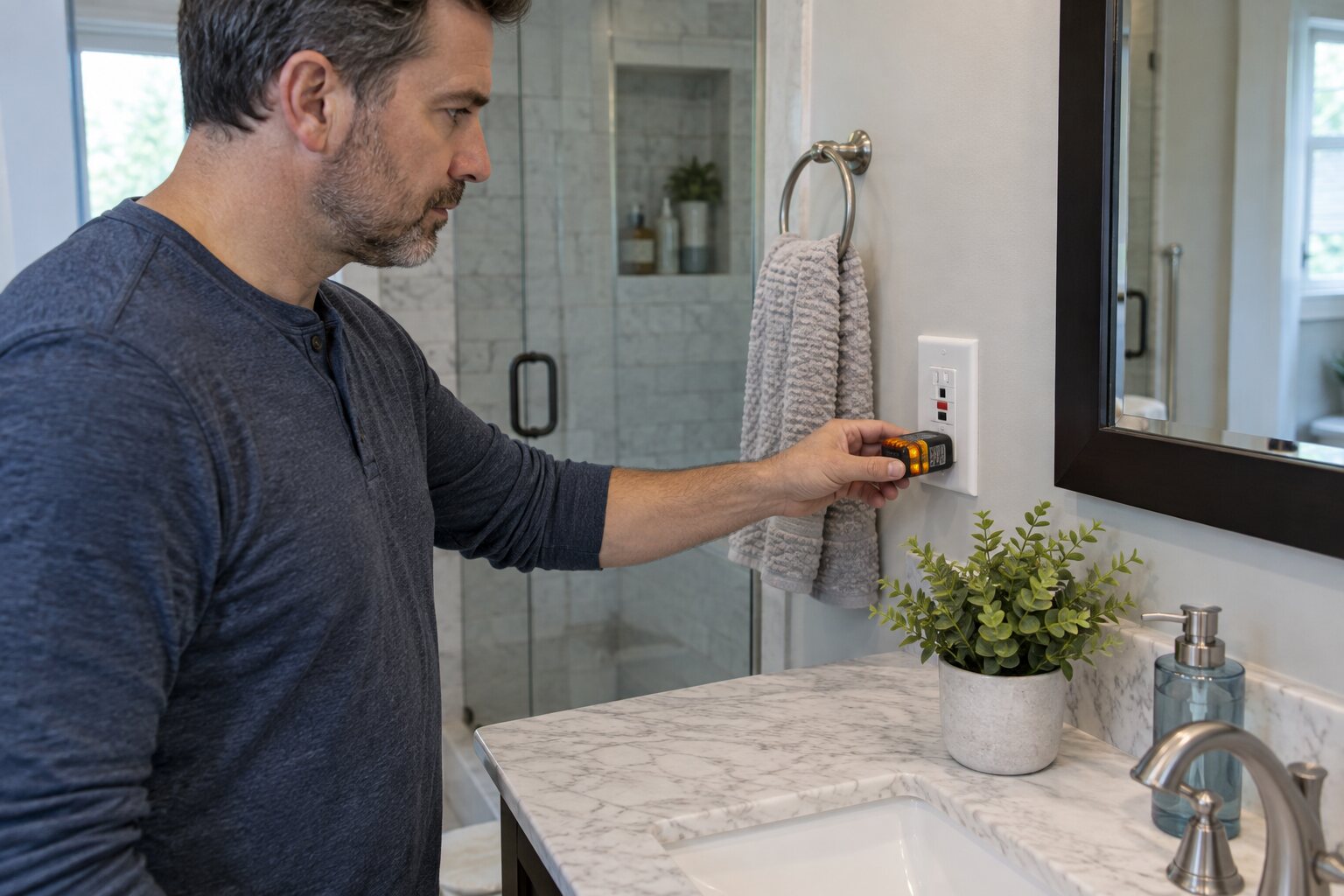
A bathroom GFCI outlet is designed to interrupt power when it detects a dangerous imbalance. Testing it periodically confirms the protection still responds, but the test should be done with a simple plug-in tester or the built-in buttons and with wet hands kept away from the outlet.
Inspect first
Look for cracks, looseness, discoloration, or signs of moisture. Do not test a damaged outlet. Keep the floor dry, remove appliances from nearby water, and use only a tester in good condition.
Use the test button
Press the TEST button firmly. A lamp or tester plugged into the protected outlet should switch off. Press RESET to restore power and confirm that the indicator returns to its normal state. If the button will not reset, another upstream GFCI may be tripped.
Know the warning signs
Stop if the outlet buzzes, smells burnt, feels warm, or trips repeatedly without a clear cause. Do not bypass the protection or replace a GFCI with an ordinary outlet. Arrange an electrician visit when the wiring or box appears damaged.
A short monthly test is a useful habit, especially in bathrooms, kitchens, garages, and outdoor areas.