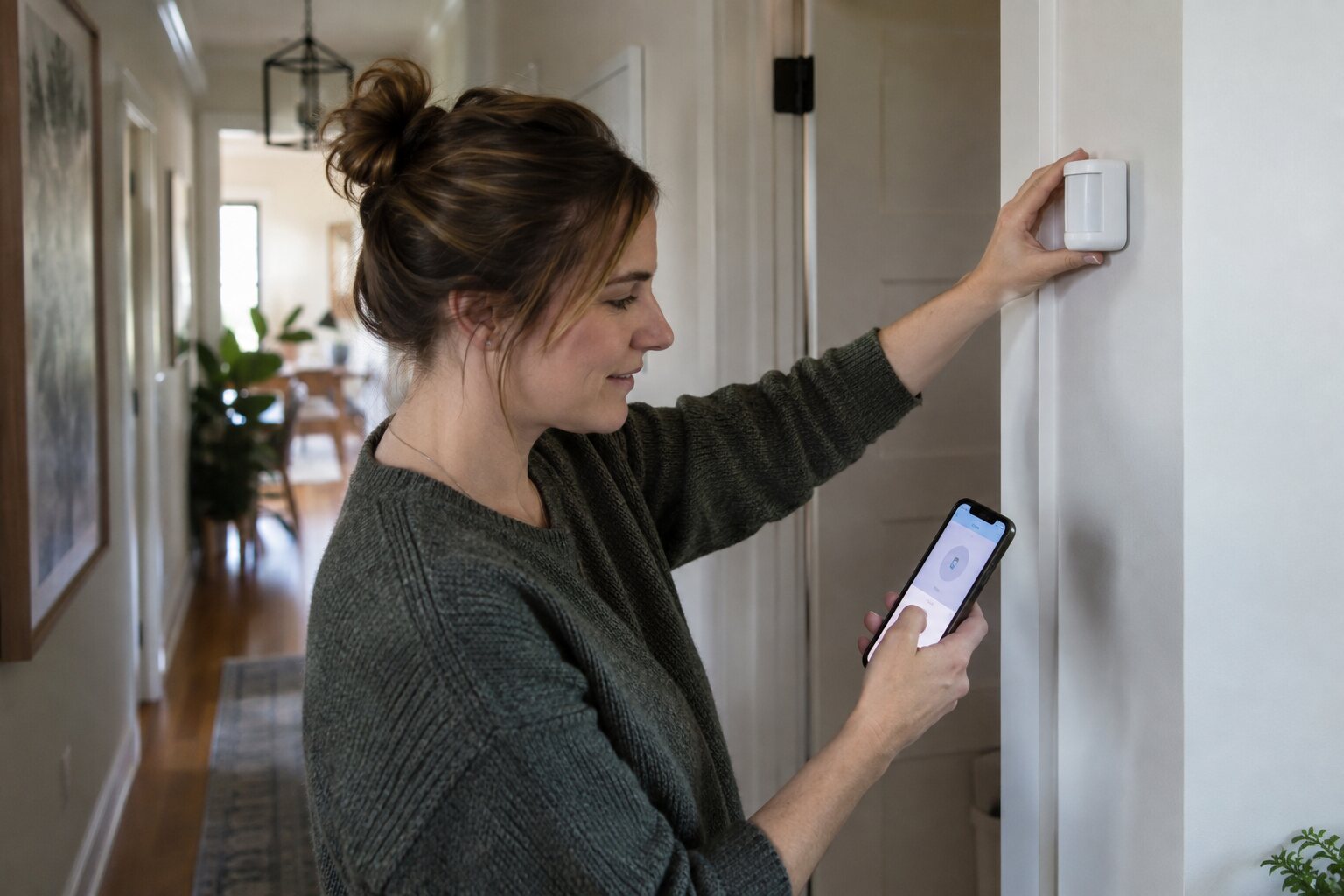
A motion sensor works best when it sees the area people actually use without triggering on pets, windows, or heating vents. Mounting height, direction, and privacy are more important than simply placing it near the door.
Choose the coverage area
Walk through the hallway and identify the approaches you want to detect. Avoid aiming directly at a sunny window, a moving curtain, or a supply register that changes temperature. Read the manufacturer’s pet and range guidance before selecting a corner.
Pair and test before fastening
Install the battery, pair the sensor with its hub or app, and test it while holding it at the proposed height. Walk across the field of view rather than straight toward it, because many sensors detect cross-traffic more reliably.
Mount without damaging the wall
Use the supplied screws or approved adhesive mount. Clean the wall before applying adhesive and allow its full cure time. Keep the sensor clear of door swings and do not cover vents, reset buttons, or battery compartments.
Adjust alerts thoughtfully
Start with a moderate sensitivity and a short test period. Reduce unnecessary alerts from pets or routine movement, and give the sensor a clear name in the app. Review account security and notification access before sharing control with anyone else.
Replace batteries on schedule and check the sensor after painting, furniture changes, or seasonal sunlight changes. A motion sensor is an awareness tool, not a substitute for a monitored alarm or secure locks.