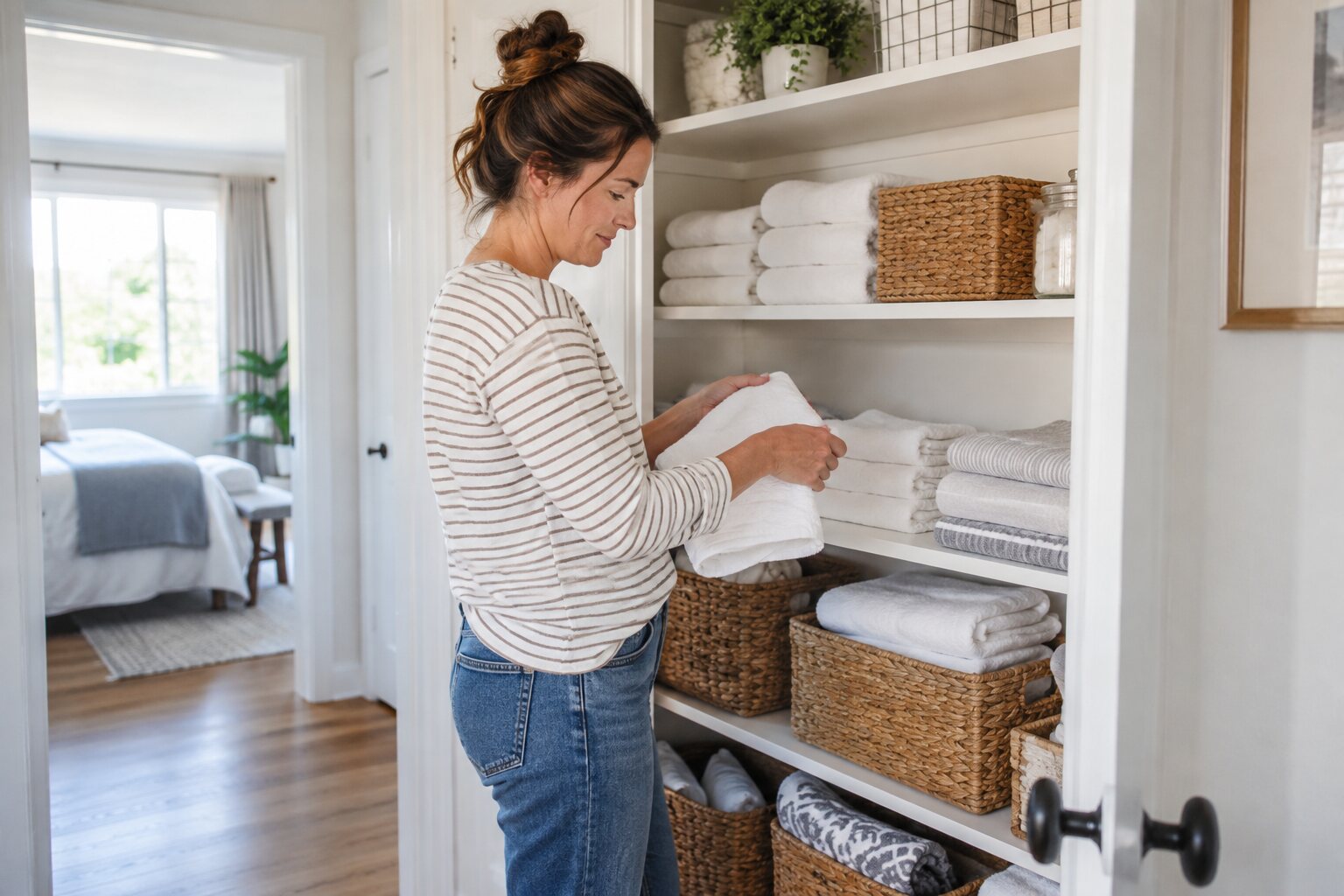
A linen closet stays usable when towels are grouped by purpose, folded to fit the shelf depth, and stored where the most frequently used items are easiest to reach. The goal is quick access and airflow, not a tightly packed display.
Empty and measure the shelves
Remove towels, bedding, and toiletries, then wipe the shelves. Measure the clear height, depth, and width, including the door swing. Discard stained or threadbare towels that no longer dry well and move rarely used linens to a higher shelf.
Group by use
Create separate groups for bath towels, hand towels, washcloths, guest linens, and cleaning cloths. Keep cleaning products away from fabric and avoid storing damp towels in the closet. Labels or open baskets help small items remain visible without needing deep stacks.
Fold for the shelf, not the showroom
Choose a fold that lets each towel stand or sit in a stable row. Keep stacks low enough to remove one item without pulling down the others. Leave a little space between piles so air can circulate and inspect the back of the shelf.
Maintain the system
Return clean towels to the bottom or back of the group so use stays even. Recheck the closet seasonally for moisture, musty smells, pests, and shelf sag. Fix a water leak or ventilation issue before storing more fabric.
A small closet works better with fewer, well-used linens than with overflowing piles. Keep spare bedding in breathable containers and avoid plastic bags for fabric that is not completely dry.