
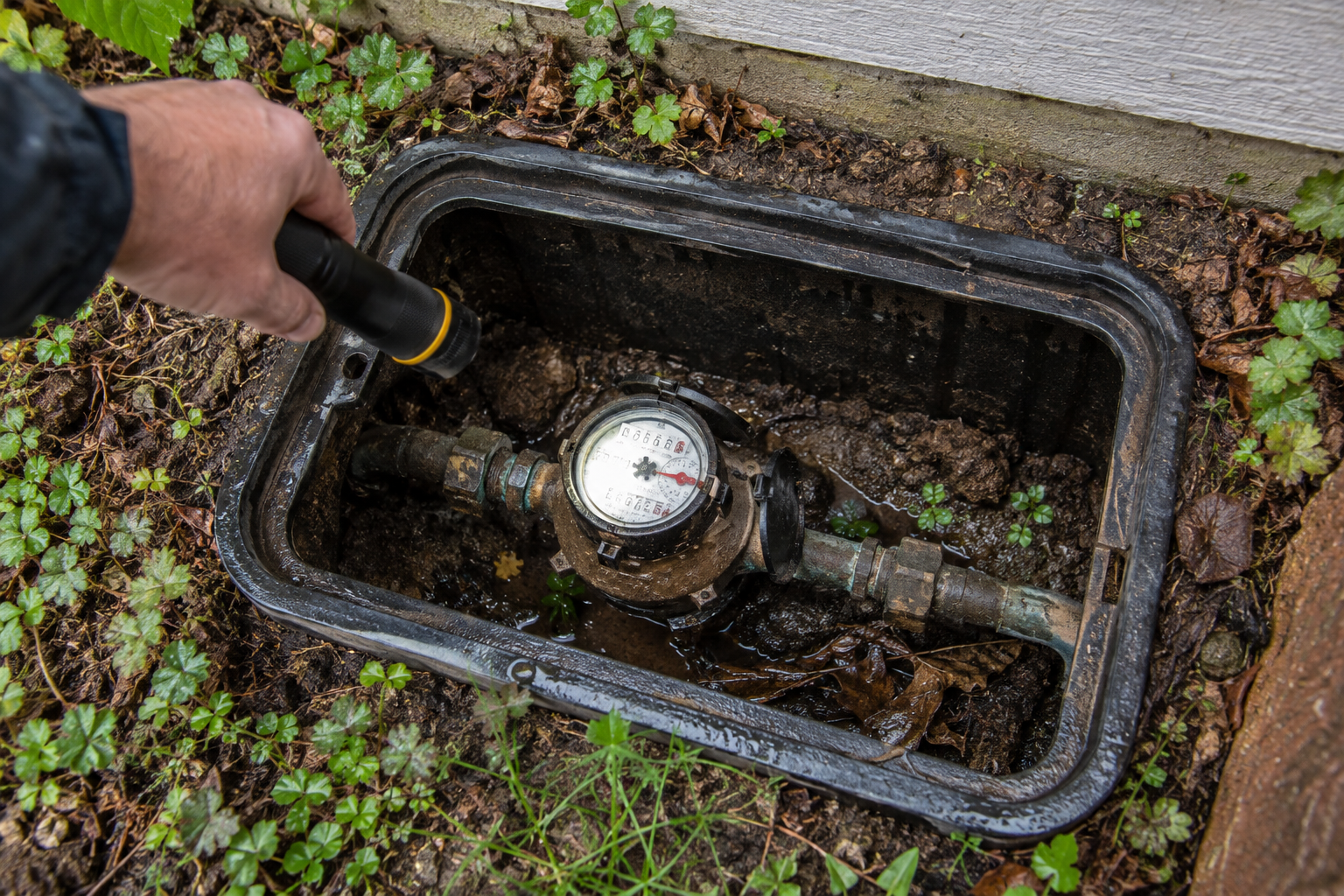
A quiet water meter can reveal a leak before it becomes a stain or a high bill. The check takes minutes and does not require opening plumbing.
Step-by-step
Turn off faucets, ice makers, washing machines, and irrigation. Record the meter reading and watch the small leak indicator for ten minutes. If it moves, close one fixture valve at a time to narrow the branch. Recheck toilets with a few drops of food coloring in the tank; color in the bowl indicates a flapper leak.
Keep it safe
Never remove a meter lid or repair the utility side yourself. If the indicator moves with every fixture isolated, contact the utility or a licensed plumber and document the readings.
Quick check: Add this task to a seasonal home log, take a before-and-after photo, and stop if the condition is outside a simple maintenance fix.
Why this small job matters
Read a Home Water Meter to Check for Leaks is the kind of task that is easy to postpone because the first symptom rarely feels urgent. In a lived-in Home Systems routine, small changes add up: a little dust, a little moisture, or a little wear can make equipment work harder and can turn a ten-minute check into a weekend repair. The useful approach is to notice the change, write down what you see, and make one controlled adjustment at a time. That habit gives you a baseline for the next season and makes it easier to explain the situation if a specialist is needed.
What to look for as you work
Take a slow look before touching anything. Check for loose fasteners, unusual sounds, water marks, heat, damaged seals, or material that has changed color. Work in good light and keep the original parts, labels, and measurements nearby. If the result is not clearly better after the first safe step, stop and reassess rather than adding more force or more product. A short note about weather, age, and recent changes often reveals a pattern that is invisible in a single visit.
A practical follow-up routine
Finish by cleaning the work area and testing the result under normal conditions. Put the next inspection on a calendar, especially when the task depends on a season or a filter, seal, or moving part. Keep a simple home log with the date, what you changed, and a photo of the finished condition. That record turns maintenance into a calm routine instead of a reaction. When you find exposed wiring, structural damage, gas smells, persistent leaks, or anything that could injure someone, leave it alone and contact a qualified professional.